
In a double delight, retail inflation eased to a one-year low of 5.72 per cent - staying below the upper tolerance limit for two months in a row, while factory output rose sharply to 7.2 per cent on the back of healthy growth in manufacturing. The retail inflation numbers based on Consumer Price Index (CPI) will provide some room for the Reserve Bank to further moderate the quantum of hike in key interest rate or even press a pause button. The RBI has been on a rate hiking spree since May 2022 in its bid to tame inflation, having raised the repo rate by a cumulative 225 basis points (bps).

The wholesale price-based inflation eased for the second consecutive month in January at 12.96 per cent, even though food prices hardened, the government said on Monday. WPI inflation has remained in double digits for the tenth consecutive month beginning April 2021. Inflation in December 2021 was 13.56 per cent, while in January 2021, it was 2.51 per cent.

Vehicle sales across categories registered an increase of 5.03 per cent to 16,03,292 units from 15,26,514 units in November 2013.

Hit by the third wave of the COVID-19 pandemic and soaring fuel prices, airlines are flying towards record losses with a likely loss of a whopping Rs 20,000 crore for the full fiscal year, warns a report. The airlines are flying towards their steepest-ever net loss of over Rs 20,000 crore this fiscal, which will be 44 per cent more than Rs 13,853 crore they bled last fiscal, Crisil said in a report. This will push back the industry's recovery beyond fiscal 2023, the report based on three large listed airlines--Indigo, Spicejet, and Air India--which together command 75 per cent of the domestic traffic, warned.

Indian airline industry is expecting to prune its net losses to Rs 3,000-5,000 crore in this fiscal from an estimated Rs 17,000-17,500 crore in FY2023 on the back of improved yields and stable cost environment, credit ratings agency ICRA said on Tuesday. At the same time, ICRA also estimated that domestic air passenger traffic will expand by 8-13 per cent each in FY2024 and FY2025. The rating agency has also maintained its stable outlook on the industry in view of healthy passenger traffic growth, improved yields and a stable cost environment.

State-owned fuel retailers IOC, BPCL and HPCL are likely to lose Rs 65,000 crore on selling diesel, domestic LPG and kerosene below cost during the current fiscal, Oil Minister Murli Deora said on Wednesday.
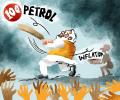
An average Indian spends no more than Rs 1.3 lakh per year, according to official statistics. This is close to what an average Indian earns annually. At this level of per capita income today, one litre of petrol costs one-third of an average Indian's daily income (Delhi prices), making it highly unaffordable. People in most other Asian and emerging countries find it more affordable.
Reliance Industries Ltd on Friday reported a 9 per cent rise in its December quarter net profit as a planned maintenance-induced weakness in oil business earnings was offset by stability in retail and telecom verticals. The oil-to-retail-to-telecom conglomerate's consolidated net profit of Rs 17,265 crore, or Rs 25.52 per share, in October-December - the third quarter of the current 2023-24 fiscal - was 9.3 per cent higher than Rs 15,792 crore, or Rs 23.19 a share, earning a year back, according to a company statement. Quarter-on-quarter, the profit was lower when compared to Rs 17,394 crore earnings in the preceding three months ended September 30.
The price of petrol was hiked to Rs 101.39 a litre in Delhi from Rs 101.19 and to Rs 107.47 per litre in Mumbai, according to a price notification of state-owned fuel retailers. Diesel rates went to Rs 89.57 a litre in Delhi and Rs 97.21 in Mumbai.
The policy review observed that the moderation in inflation, excluding food and fuel, that was witnessed in the first quarter of 2017-18 has "by and large, reversed".

'I wonder if they will keep it up after the elections.' 'I fear they'll start questioning eligibility -- income, age, bank accounts -- and eventually stop the scheme altogether.'

India's industrial production contracted by 3.6 per cent in February, official data showed on Monday. According to the Index of Industrial Production (IIP) data released by the National Statistical Office (NSO), manufacturing sector output declined by 3.7 per cent in February 2021. Retail inflation rose to 5.52 per cent in March, mainly on account of higher food prices, government data showed on Monday. The consumer price index (CPI) based retail inflation stood at 5.03 per cent in February.

Notwithstanding reports of a government-Bharatiya Janata Party thaw, Parliament was disrupted for the third consecutive day on Thursday over price rise and other issues with no signs of normalcy returning on Friday.
Reliance Industries Ltd, India's most valuable company, is back on a growth path after six months of challenges as it posted better than expected earnings in the December quarter, brokerages said.

Less-than-expected rainfall and a poor spatial distribution, experts say, can rekindle fears of a rise in food and fuel inflation that can have an impact on the RBI's monetary policy. The fear of less than optimal rainfall due to El Nino this year, analysts believe, is the biggest short-term risk for the markets, which they said has not been fully priced in yet by them. Monsoon set over Kerala on June 08, a week later than its scheduled date.

Reliance Industries Ltd, India's most valuable company, on Friday reported a 5 per cent drop in its June quarter net profit as lower fuel cracks and petrochemical margins outdid gains in telecom and retail businesses. The oil-to-retail-to-telecom conglomerate's consolidated net profit was at Rs 15,138 crore, or Rs 22.37 per share, in April-June -- the first quarter of the current 2023-24 fiscal year -- compared to Rs 16,011 crore, or Rs 23.66 a share, earnings a year back, according to a company's statement.
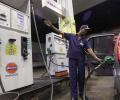
After the latest spike in crude oil prices, petrol prices could potentially go up to around Rs 90 a litre making a dent in the consumer's wallet. This, the analysts fear, will push the cost of vehicle ownership in the country, further reducing the demand potential for the industry.
Petrol price will go up by Rs 3.18 per litre, diesel by Rs 3.09.

Rahul alleged that the BJP-led government wanted to take money from the common man to give it to its "rich friends" and asked it to tell the people why they were not reducing the price of petrol in the country.

'Investors looking at the next 6-12 months can be certain that the Fed will maintain its easing cycle, and we expect the overall environment to be conducive for fixed income investments for portfolio diversification.'

India's services sector growth quickened in June from May's five-month low, amid a stronger rise in new orders and an unprecedented expansion in international sales, a monthly survey said on Wednesday. The seasonally adjusted HSBC India Services Business Activity Index rose from 60.2 in May to 60.5 in June, pointing to a sharp expansion in output. In the Purchasing Managers' Index (PMI) parlance, a print above 50 means expansion, while a score below 50 denotes contraction.

After some enforced slowdown in offtake during April-May 2024 due to elections, the cement sector is looking at a possible demand rebound which may help it to push up prices. The April'24 offtake was muted while May'24 saw some improvement with a likely 5-6 per cent rise in demand month-on-month (MoM). In June, some price hikes seem to have been taken, which suggests more sustained improvement in demand.
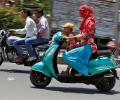
The two-wheeler sector has been underperforming its peers on the volumes front for over five quarters now. Even in the March quarter, Bajaj Auto and Hero MotoCorp posted a 17-24 per cent YoY decline in volumes, the sharpest in the listed auto universe. The ongoing impact of frequent price hikes, all-time high fuel prices, and muted rural sentiment has led to the lacklustre showing by two-wheeler makers. What has aggravated the situation for two-wheeler companies, which get almost all their sales from the internal combustion engine or ICE-based units, is the traction for electric two-wheelers (EV).

Making sense of the international crude market is incredibly hard.

A little away from the city in the northern suburbs, vegetables are 15-30 per cent costlier.

All essentials are in short supply due to import restrictions forced by the forex crisis.

The government on Tuesday increased the windfall profit tax on crude oil produced in the country and reduced the levy on exports of diesel. The tax, levied in the form of Special Additional Excise Duty or SAED, on domestically produced crude oil was increased to Rs 9,800 per tonne from Rs 9,050 a tonne, according to an official notification. SAED on the export of diesel was reduced to Rs 2 per litre from Rs 4 a litre and on jet fuel or ATF to nil from Rs 1, the notification said.

India's overall retail inflation eased to 4.41 per cent in September, helped by falling commodity prices, but rural inflation was at 5.05 per cent

Grasim Industries has announced a rights issue of around Rs 4,000 crore with the promoters committed to fully subscribing to their entitlements and to covering any unsubscribed portion. This is to part-fund capital expenditure (capex) of Rs 10,000 crore in a new foray into the paints business. The company has already invested Rs 3,640 crore in the paints business (by Q1FY24). The management has outlined a capex of Rs 5,700 crore for FY24, which includes Rs 4,280 crore allocated for the paints business, of which Rs 1,050 crore has already been spent in Q1FY24.

Companies to hold rates in Delhi until new government is formed.

Bond markets, global as well as domestic, are likely headed towards hard times over the next three to six months, as higher vegetable prices, rising fuel costs, and improved wages may keep inflation hot, believe analysts, who expect the yields to hit 7.5 per cent in the near-term from the current 7.234 per cent. In this backdrop, they suggest investors can put in money in funds/instruments with residual maturity of 4 to 6 years, while longer-term investors can allocate cautiously to the longer end in the range beyond 7 years.
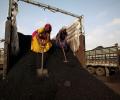
The Q2FY25 revenue for Coal India (CIL) was reported at Rs 30,700 crore (down 6 per cent year-on-year or Y-o-Y and 16 per cent sequentially). The blended average selling price was Rs 1,622/tonne (down 6 per cent Y-o-Y and 3 per cent quarter-on-quarter or Q-o-Q). Adjusted operating profit stood at Rs 7,200 crore (down 20 per cent Y-o-Y and 38 per cent Q-o-Q) due to lower-than-expected e-auction volumes and higher costs.

Travel time, too, has not fallen much after the abolition of octroi with trucks still queued up at regional transport offices and toll tax plazas.
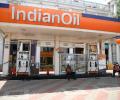
Petrol price on Tuesday was increased by 15 paise per litre and diesel by 18 paise as State-owned fuel retailers started passing on the increase in international oil prices to consumers after an 18-day hiatus.

Two-wheeler sales, however, declined 21.4 per cent to 14,13,378 units last month, as compared to 17,98,201 units in November 2019. Commercial vehicle sales also slipped 31.22 per cent to 50,113 units, as against 72,863 units a year ago. Similarly, three-wheeler sales fell 64.98 per cent to 24,185 units last month, from 69,056 units in the year-ago period. Tractor sales, however, grew by 8.47 per cent to 49,313 units last month, against 45,462 units in the same month last year.

Retail inflation declined to a five-year low of 3.54 per cent in July mainly on account of subdued prices of food items, and base effect, according to official data released on Monday. The Consumer Price Index (CPI) based retail inflation was 5.08 per cent in June 2024 and 7.44 per cent in July 2023.

'The actual price of petrol is Rs 35 and it jumps to Rs 88 because of government taxes.'
Inflation rose for the third consecutive week to 5.03 per cent for the week ended May 29 despite cheaper vegetables and fruits, eggs and several edible oils.

'If weak indicators persist, there is a risk that India could slip into a prolonged slowdown similar to the one experienced between 2014 and 2019,' warns Debashis Basu.
